
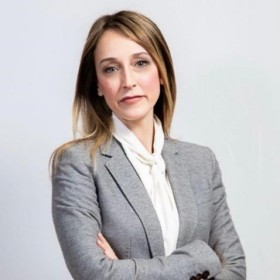
Ingrid, Estonian Language Unit
I studied to be a primary school teacher in Estonia, but became instead an assistant in the Estonian Language Unit of the Translation Service of the Council in Brussels for 13 years, from where I have now progressed to become a Local Resources Manager in the same unit.
I never really planned to live and work abroad, but life decided otherwise. I came to Belgium almost 17 years ago and have been working in the Council for 14 years. The Council is a multicultural and multilingual working place. The Estonian Language Unit (as are other language units in the Council) is special because most of my colleagues are Estonian. Working here gives me a chance to stay in touch with Estonian culture and my mother tongue. After so many years living in Belgium I have grown to love this small and peculiar country, mostly known for its chocolate and beer. But those who are willing to search further will find that there is much more to it.
Estonian Language Unit of the Translation Service of the Council
Daria, The Joint Research Centre
“I am a purpose-led professional with a background as an industrial economist and public affairs specialist. Currently, I am Team Leader for Business Development and Strategic Partnerships at the JRC.
What I love about this exciting working environment—and about my current role—is the diversity of key interconnected industrial dossiers I work on, and their impact on policies.”

Goran Lucic, lingustic assistant in the Croatian-Slovenian lawyer-linguist tandem team
I started working for the European institutions in 2014, moved around a lot as contract/temporary agent in the Council and the European Commission, before finally joining the Quality of Legislation Directorate (DQL) in 2019 as assistant to lawyer-linguists.
Working in the DQL is quite challenging and interesting at the same time, as we are the final instance before something gets published in the Official Journal of the EU, so we have to be very attentive and have an eye for eventual typos and/or other kinds of mistakes.
The thing about working here that I like a lot is that, although we are in a multicultural environment, in our rather small tandem teams we are in constant touch with our mother-tongue.
Another very important aspect is that, on the one hand, we are not at all micromanaged by the hierarchy, while, on the other hand, managers do take care of their staff's needs by empowering them to get adequate training to guarantee the best possible service.
Lingustic assistant in the Croatian-Slovenian lawyer-linguist tandem team at the Council of the European Union

Renée Idzerda, linguistic assistant for the Dutch Translation Unit
After gaining 15 years of experience in the private sector (mainly in internal and external communication), I joined the European Commission in 2013 and took up my current position at Directorate-General for Translation (DGT).
As a translation assistant at the European Commission, you are always in the middle of the news. Whereas in other Directorate-Generals the focus is on one policy area, at DGT all possible themes are covered. And we receive all types of text formats, such as legislative proposals, decisions, speeches, press releases, letters, etc. We are therefore always involved in current EU policy.
As an assistant you are at the service of others: translators, the head of unit, other assistants, etc. There is always someone who needs your help. Moreover, translators work to strict deadlines. Being able to quickly assess what is important, i.e. recognising priorities, is therefore a must. Especially as these priorities can change. In order to deal with unexpected twists in the planning, you need to have talent for organising. Good teamwork and communication with colleagues are also crucial.
As a translation assistant, you have many diverse responsibilities. It is therefore a plus if you like multi-tasking. Moreover, you work very independently: each assistant handles (every aspect of) the translation requests within his or her portfolio. The work is therefore varied. Translators count on you to spontaneously jump in where you can, so that they can focus on their work.
When I started out as a translation assistant, I had a lot to deal with. Fortunately, DGT provides all the necessary training. Moreover, during your induction period you are coached by experienced colleagues, either from your own or from another language department. Continuous training is encouraged. And this is very welcome, because the translation world quickly evolves, also from a technological point of view. Only if you master new applications quickly you can offer the best possible support.
Dutch and Flemish people work together in our department. The working atmosphere is surprisingly informal, more than you might expect from an EU institution. There is a lot of collegiality. This not only ensures that we deliver high-quality translations as a team, but also that it is a pleasure to work here, even in periods of heavy work pressure.
The official language in our department is Dutch, our mother tongue. That is quite special in such an international environment. It makes working together comfortable. We also use other languages - mainly English and French - on a daily basis in our contacts with colleagues from other departments.
As an assistant, you work with people at various levels within the organisation. Strong language and communication skills are therefore essential!
Working as a translation assistant at the European Commission means, above all, helping to steer the work of translators, the head of unit and your fellow assistants in the right direction. In this way, you contribute to the communication with EU citizens.
Linguistic assistant for the Dutch Translation Unit at European Commission (Directorate-General for Translation)

Ann De Wachter, linguistic assistant at the Dutch translation unit
My name is Ann, I am Belgian and I speak Dutch as mother tongue as well as English, French, Spanish and German. I joined the European Commission in 2003 with a temporary contract and became a permanent official in 2005. With good preparation and determination, passing an open competition is certainly not a mission impossible!
Working for the EU has been nothing but a positive experience. You work with enthusiastic, dedicated and competent colleagues. You can constantly develop your professional and personal skills through a large variety of courses. The institutions promote job mobility, so you can acquire experience in different positions throughout your career.
I worked in four different positions before I joined Directorate-General for Translation (DGT) Dutch language department as a linguistic assistant. I like the variety of my tasks and the independent way of working. I can put my language knowledge, eye for detail and practical approach to good use. Good word processing, prioritising and communication skills are also important, as well as a proactive attitude.
In my work for DGT, I deal with different types of texts related to all domains in which the EU is active. I will never forget the process leading to the Brexit-agreement. It took a whole team of translators and assistants to ensure timely delivery of the translations involved. International crises, such as the war in Ukraine, also have an impact on your work. Events like these, both foreseen and unexpected, show how much our work – that of assistants included – is subject to the ins and outs of EU-politics.
I also love working in an international and multicultural environment. When you walk through the building, you see posters and newspapers from different countries. In the elevator or cafeteria, you hear different languages. When you socialize with your colleagues, you learn a lot about their culture and habits. Even though my direct colleagues, from the Dutch language department, all speak Dutch as a mother tongue, comparisons between Flemish and Dutch from the Netherlands can lead to amusing and animated conversations.
Linguistic assistant at the Dutch translation unit at the European Commission (Directorate-General for Translation)
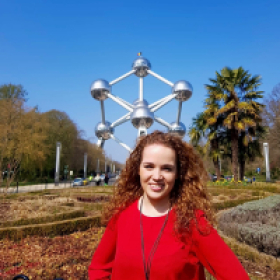
Tessa Pouels González, lawyer-linguist assistant in the Dutch team in the Directorate Quality of Legislation
My name is Tessa, I come from Spain and I work as a lawyer-linguist assistant in the Dutch team.
When I finished my master's degree in legal translation, I thought that my next step would be to work as a freelancer, but I am proud to say that the European institutions offer opportunities to motivated young people eager to be part of the European project.
Working at DQL – where we check the drafting quality of legal acts of the European Council and of the Council – is both challenging and rewarding, as you get to participate and gain an insight into the process of adopting legislation. It is most motivating to be part of a multicultural team with colleagues from different academic, professional and social backgrounds where you are constantly encouraged to continue growing personally and professionally, while benefiting from good working conditions, a wide range of training opportunities and the possibility to change jobs between services and institutions.
If you always wanted an international challenging and interesting career, I highly recommend working for the European institutions. Besides, life in Brussels is enriching and interesting with many activities and events to enjoy.
Lawyer-linguist assistant in the Dutch team in the Directorate Quality of Legislation (DQL) at the Council of the European Union
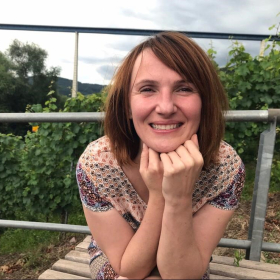
Lenkų kalbos vertimo raštu skyriaus lingvistų asistentė Agnieszka Wendel
Vertimo raštu generalinio direktorato (DGT) Lenkų kalbos departamente Liuksemburge dirbu 15 metų.
Esu baigusi ispanų filologijos ir Amerikos studijas Lenkijoje, Jogailos universitete. Prieš įsidarbindama Vertimo raštu generaliniame direktorate buvau Amerikos konsulato Krokuvoje pareigūnė ir norėjau ir toliau tęsti profesinę veiklą tarptautinėje aplinkoje.
Mėgstu savo darbą, nes:
- jaučiuosi Europos visuomenės dalimi,
- man niekada nenuobodu,
- jis padeda man tobulėti kaip profesionalei.
Darbas Vertimo raštu generaliniame direktorate man teikia daug pasitenkinimo. Jaučiu, kad darau kažką, kas tikrai svarbu pasaulyje. Dirbdama su kasdienėmis ir pasaulinėmis problemomis galiu matyti ir suprasti, ką ES reiškia mums visiems. Lingvistų asistentės pareigos suteikia man daug galimybių, nes jos kinta kartu su pasauliu. Kai įsidarbinau prieš 15 metų, tai buvo visiškai kitoks darbas. Viskas patobulėjo: įgūdžiai, programinė įranga ir kt. Turėjau progą įgyti naujų naudojimosi kompiuteriu įgūdžių, išmokti vokiečių ir prancūzų kalbas, patobulinti socialinius įgūdžius. Taip pat galėjau keletą mėnesių padirbėti Europos Parlamente – tai buvo viena iš įdomiausių patirčių.
Didžiausias man kylantis iššūkis yra suderinti profesinį ir asmeninį gyvenimą. Esu vieniša motina su dviem mažais vaikais, todėl tikrai džiaugiuosi, kad DGT leidžia man organizuoti savo darbo laiką (pvz., dirbti ne visą darbo laiką) tokiu būdu, kad jis tiktų visiems.
Į Liuksemburgą atvykau 2007 m. Tai buvo didžiulis pokytis, nes persikėliau iš beveik 1 mln. gyventojų didmiesčio į daug mažesnę sostinę. Liuksemburgas mane pasitiko su lietumi ir be transporto spūsčių, jame atradau margą tarptautinę bendruomenę. Man tikrai patiko veiksmingas viešasis transportas, suteikęs daug galimybių sklandžiai ir paprastai laiku atvykti į darbą. Gyvenimas Liuksemburge praplečia mąstyseną. Gatvėje gali išgirsti daugybę kalbų, gali susirasti draugų iš visos Europos, tikrai jautiesi pasaulio dalimi.
Lingvistų asistentė Europos Komisijos Lenkų kalbos vertimo raštu skyriuje (Vertimo raštu generaliniame direktorate)

Jana Zhvanko, linguistic assistant at the Estonian Translation Unit
I decided to participate in an EPSO competition for translation assistants; I passed it, and joined Parliament in 2008! Being an open, active and communicative person, I made the most of it and enjoyed every single day of my working life here – and I still do.
My work involves the use of a range of both linguistic and technical skills, which makes it very dynamic. Given that we use a variety of different tools and working methods, and that our technical instruments are always being developed further, there is always room to grow personally and broaden one’s knowledge.
For me, working for DG TRAD at Parliament is like building a linguistic bridge between the political world and the citizens of each member state. The EP’s newest projects bring us closer to people, and help us to connect and interact with them. I see myself as part of a big structure: as it is the case with all complex, multi-faceted mechanisms, every single part of the system is important. Only together do we make it work!
Linguistic assistant at the Estonian Translation Unit at European Parliament (Directorate-General for Translation (TRAD))
Zinaida Ankova, linguistic assistant for the Italian Translation Unit
I joined the European Commission 13 years ago, and I am currently based in Luxembourg. I am from Bratislava, Slovakia and since my childhood I was convinced that I would one day be working and living abroad.
Before passing a competition for assistants and joining the EC, I worked in different international organisations such as the International Federation of Red Cross and Red Crescent in Hungary and Switzerland, United Nations in New York.
I am currently working at the Italian Translation Unit as a Linguist Assistant. Being Slovak of Hungarian origin, this perfectly matches the ‘’United in Diversity’’ slogan of the EU and I am proud of that.
The Directorate-General for Translation (DGT) is an attractive place to work, for both translators and assistants. An excellent knowledge of Italian (or any other EU language, depending on the language department) at a native speaker level is mandatory.
My everyday work consists of supporting the translation and terminology work of the unit and the department, handling translation requests, preparing translations and other language products, handling outsourced assignments, screening originals and pre-processing reports for references to background documents linked to translation, document alignments, checking their quality and correcting them, finalising documents from the point of view of typography and page-layout and maintaining translation project memories.
This kind of work, varied and exciting, keeps me mentally fit, challenged and gives no room for procrastination or boredom.
EC and DGT offers to the newcomers numerous trainings that are remarkably well done, helping to quickly get familiar with job requirements. On top of these, I am very lucky that in my Unit I could benefit from an excellent coaching of my assigned mentors. My team and hierarchy provide support, recognition and daily contributes towards an outstanding working environment.
For me working for the EC, an organisation that represents the interest of 450 million EU citizens, is a huge responsibility, commitment and source of pride and personal satisfaction.
Linguistic assistant for the Italian Translation Unit at European Commission (Directorate-General for Translation)
Centrinių sistemų padalinio vadovas Todor T.
„Gimiau už Europos Sąjungos ribų, už vadinamosios geležinės uždangos, bet augau pokyčių laikais. Baigiau Sofijos technikos universitetą. Netrukus mano šalis įstojo į ES ir aš pradėjau dirbti Europos Sąjungoje, nes keliauti į kitas šalis, dirbti užsienio įmonėje ir gyventi užsienyje tapo lengviau. Kelerius metus dirbau ir gyvenau Europos Sąjungoje, o dabar dar ir dirbu vienoje iš jos institucijų.
Po 7 metų patirties privačiajame IT sektoriuje 2011 m. tapau vienos iš 34 decentralizuotų ES agentūrų laikinuoju darbuotoju. Joje supratau, kad darbas Europos Sąjungos institucijoje yra ne tik patirtis daugiakultūrėje aplinkoje, bet ir savo gebėjimų bei kvalifikacijos panaudojimas bendrai įvairių šalių, kurių kiekviena gali veikti skirtingai, gyventojų gerovei. Mano, programų portfelio valdytojo, užduotis buvo užtikrinti tinkamą įdiegtos SAP ERP programinės įrangos veikimą. Su specialistų komanda analizavome atnaujinamus veiklos reikalavimus ir diegėme reikiamas papildomas funkcijas.
2012 m. dalyvavau tokiame pat kaip šis EPSO konkurse – Europos Sąjunga ieškojo kvalifikuotų ir patyrusių IRT specialistų, norinčių tapti jos institucijų darbuotojais. Laimėjęs konkursą pradėjau dirbti Europos Parlamento Naujovių ir technologinės pagalbos generaliniame direktorate (ITEC GD), kuriame tebesu ir šiandien. Organizacijos yra kaip gyvi organizmai – procesai jose bręsta, duomenų ir pajėgumų daugėja, kuriami, vykdomi ir baigiami projektai, nuolat (dažnai pasikeitus prioritetams) kažkas vyksta.
Per pastaruosius 8 metus Naujovių ir technologinės pagalbos generaliniame direktorate pareigas pakeičiau tris kartus – buvau projektų vadovu, buvau atsakingas už programas, o dabar esu padalinio vadovas. Darbas organizacijos, atstovaujančios 450 mln. ES piliečių interesams, IT padalinyje yra ir atsakomybė, ir įsipareigojimas, kur gebėjimas gerai dirbti komandoje tėra pradžia. Tai taip pat neįtikėtinas karjeros kelias berniukui, kuris pasuko į IT sritį, nes mėgo kompiuterinius žaidimus.“
Europos Parlamento Naujovių ir technologinės pagalbos generalinio direktorato Organizacijos IT sistemų skyrius