
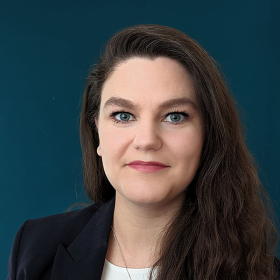
Alexandra K., programų vadovė
Darbą Europos Komisijos tarnybose pradėjau 2019 m. kaip Užimtumo, socialinių reikalų ir įtraukties GD politikos pareigūnė. Dirbu skyriuje, kuris atsakingas už tam tikrą geografinę teritoriją, tai reiškia, kad atlieku konkrečios šalies (mano atveju – Švedijos) stebėseną. Kiti mano skyriaus kolegos stebi pokyčius Italijoje ir Danijoje.
Mano darbas labai įvairus ir kelia daug iššūkių, jį dirbant reikia derinti politinį darbą (daug dėmesio skiriant užimtumo ir socialiniams klausimams pagal Europos semestrą) ir Europos socialinio fondo Švedijoje programų valdymą.
Pagrindinė darbo kalba mano GD yra anglų, tačiau kadangi daugiausia dėmesio skiriu Švedijai, taip pat dirbu švedų kalba. Kiti kolegos taip pat dirba atitinkamomis kalbomis tų šalių, kurių stebėseną vykdo. Mano skyrius yra išties daugiakalbis!
Esu įgijusi Stokholmo universiteto teisės magistro laipsnį. Prieš įsidarbindama Europos Komisijoje, dirbau teisių gynimo ir kampanijų rengimo NVO.
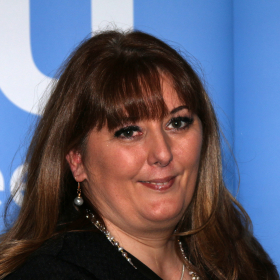
Komunikacijos asistentė Krystle
"I am Krystle and I work as a communications assistant at the European Commission in Brussels, I have reduced mobility and I have been working for the European institution since 2002.
I highly recommend applying! No physical handicap is an obstacle, competitions are based on knowledge, not a marathon. Everyone is accepted, nationality, color, gender, physical disability, ... nothing is an obstacle. All EU nationalities from all horizons are represented, the difference is positive. Maltese PRM or Estonian visually impaired, it has no importance. Multicultural means working with others, without making any distinctions. The Institutions have set up services that welcome all types of people, equal opportunities are a real right."
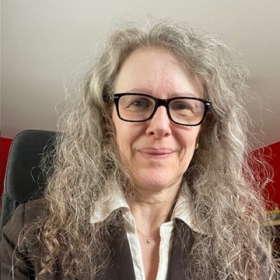
Testų rengimo ir vykdymo skyriaus vadovė Angela Heberling
Angela Europos Sąjungos institucijų tarnautoja tapo 1993 m. liepos mėn. pradėjusi dirbti Europos Komisijos aplinkos padalinyje.
Po dvejų metų ji ėmėsi daugiau žmogiškųjų ryšių klausimų ir pradėjo karjerą Europos Komisijos įdarbinimo tarnyboje, kuri vėliau buvo integruota į dabartinę Europos personalo atrankos tarnybą (EPSO). EPSO ji ėjo įvairias pareigas: buvo darbo grupės, atsakingos už EPSO vystymo programos įgyvendinimą, narė, Atrankos valdymo biuro, atsakingo už visų konkursų ir atrankų stebėseną, vadovė, E. atrankos ir testų rengimo skyriaus vadovė, Planavimo ir koordinavimo skyriaus vadovė, o dabar ji yra Testų rengimo ir vykdymo skyriaus vadovė.
Nuo 2020 m. lapkričio mėn. ji yra EPSO direktoriaus pavaduotoja.
Angela yra susituokusi ir turi du vaikus.
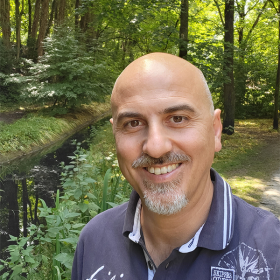
Roberto R. (Europos Komisija)
„Be kitų įdomių ir man mielų kultūriniu ir aplinkos, socialiniu ir profesiniu požiūriu dalykų, susijusių su Briuseliu, labiausiai man patinka tai, kad čia yra galimybė gyventi taip, tarsi gyventum kaime (kai kuriose miesto dalyse, netoli centro, Watermael Boitsfort), kur gali pamatyti avių, vilkų ar stirnų, kertančių ramų parkelį kai kurių Komisijos pastatų link; be to, visur yra daug sporto salių (ir galimybių sportuoti). Taip pat įspūdinga stovyklų (sporto, kultūros, muzikos ir pan.) pasiūla mokyklinių atostogų metui.
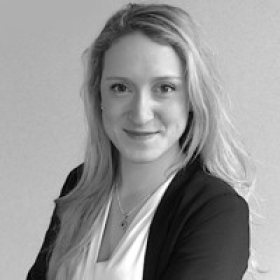
Julia W. (European Commission, Directorate-General for Energy)
“Right after I joined DG ENER in 2019, the European Green Deal was adopted: Europe was the first continent to aim for carbon neutrality by 2050. Three years later, energy is still at the core of EU policy. Yet, we are facing new challenges, like security of supply and energy prices. Energy is everywhere in our lives, in our economies and in geopolitics. That it was makes it fascinating.”
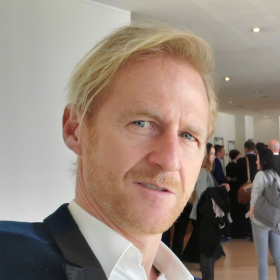
Gerald (European Economic and Social Committee)
“I am working since 2008 for the European Economic and Social Committee (EESC), for the Section for Economic and Monetary Union and Economic and Social Cohesion. In 2016, I passed a specialised EPSO competition for financial economics, and became an appointed official. My fields of work are on financial and capital markets and the budget of the European Union, but also issues related to strategic foresight.
In my job I work closely with the members of the EESC, that represent organised civil society, and that feed with their expertise into the EU´s policy making process. I give input in the process of drawing up opinions, organise hearings and conferences, and write speeches. It is of paramount importance to stay up to date to policy developments. To this end, I liaise closely with colleagues from the European Commission, but also with Parliament, think tanks, and civil society interest groups. I enjoy working in a multicultural working environment, with highly competent and interesting colleagues in my unit and the organisation. My job gives me insight to a range of topical policy matters that fit with my educational background.”
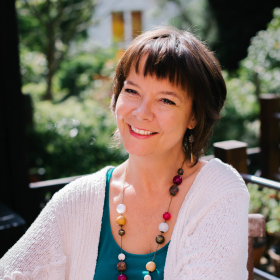
Susanne (Council of the EU)
"Being a policy officer in the field of migration fully corresponds to what has been my main subject of interest ever since I studied refugee law at university. Gaining hands-on experience from both the Danish Immigration Service and UNHCR and witnessing a real refugee crisis in 1996-97 certainly gave me an insight I have used a lot since I started in the migration team in the Council Secretariat back in 2015, right at the beginning of a refugee crisis in Europe. It is also tough to do this line of work because you deal with a policy that affects many thousands of people directly every day and there are no easy solutions."
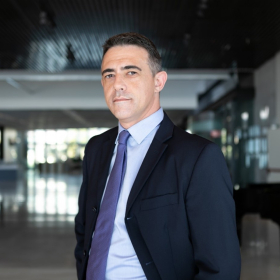
Stefano (Boards of Appeal – EUIPO)
"I am from Italy and my hometown is Bologna, in the Emilia-Romagna region.
I work as a legal assistant at the Boards of Appeal. My daily work mostly consists of drafting appeal decisions. In this position, I have the chance to deal with many legal grounds and complex cases relating to EU trade marks and registered Community designs. This makes my daily work very various and interesting under several aspects. I am also an accredited mediator and occasionally I have the chance to litigate before the General Court of the EU. In particular my role as a mediator makes my work closer to users and their most profound interests. As an IP professional and previously an attorney-at-law, getting back in touch with ‘clients’ and providing them with effective dispute resolution tools is a part of the work I was truly missing.
I really enjoy living close to the sea and enjoy Alicante’s beaches. Nevertheless, my favorite places in Alicante are its coves where the water is often crystalline, and one can enjoy a more natural, peaceful and private environment. I also like other sea spots in Alicante’s province such as Playa La Granadella or mountain natural springs in the interior such as El Toll Blau where the environment is greener and fresher.
Becoming an IP specialist at the EUIPO is a unique opportunity to join a multicultural and very dynamic work environment and represents an important challenge for any IP professional who wishes to give a tangible contribution to the EU economy and IP ecosystem. The EUIPO has been awarded as the most innovative IP Office and I can agree that new professional paths are always possible here. Furthermore, working with such great experts from all over the EU and sharing different professional and personal backgrounds is a very enriching experience which makes me continuously improve my skills and broaden my competences."
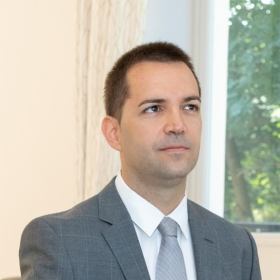
Aimar (Council of the EU)
“Working in the Budget and Cohesion Unit in the General Secretariat of the Council is not all about crazy Excel tables and getting caught up in figures. It is actually a very exciting policy post! People may think that budgetary affairs are boring, but the opposite is true. We work in a very political environment where the real priorities of the EU get decided: where the EU spends the money is what really matters, and we are right at the heart of that interesting and (sometimes) exhilarating decision-making process!”
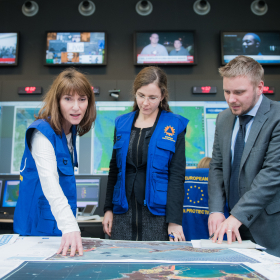
Maria (European Commission)
"My name is Maria and I am Spanish, from Madrid. I have lived in Brussels for the last 20 years and I have to say that I have very much enjoyed it since the start. Brussels is a not so big, but it is very cosmopolitan, which suits me very well. In the streets, you overhear so many languages and see so many different types of people, which strangely makes me feel at home.
Having a background as a lawyer, I have been working in DG ECHO since 2008. DG ECHO deals with Humanitarian Aid and Civil Protection. Specifically, since 2016 I have been working in the directorate dealing with emergencies, first in the European Emergency Response Center (ERCC) and now dealing with the European Humanitarian Response Capacities (EHRC).
The ERCC helps to coordinate a coherent EU response to major disasters occurring inside and outside the EU: earthquakes, conflicts, cyclones, floods, etc. The unit provides a platform for coordination within the EU institutions and Member States. The Center also has a 24/7 duty system that coordinates with partners like the UN, international organizations, NGOs and other crises centers in the EU and the world.
Concretely, now I work as a Team Leader in the EHRC which designs, follows, and monitors DG ECHO's directly implemented operations outside the EU, especially after emergencies: transport of humanitarian cargo, passengers, establishment of warehouses for partners, regular routes for inaccessible areas in central Africa, emergency expertise, etc.
Unfortunately, there are too many crises in the world, but what I really like about my job is that I can bring my contribution whenever disasters strike vulnerable populations, partially fighting the feeling of helplessness that we all have before them.
If you feel this itch and like to work in an international environment, I encourage you to join us. It is also a very dynamic environment, with many dedicated colleagues driven by a shared passion to bring European solidarity to those in need. Good and committed professionals have plenty opportunities to grow, travel, live abroad while doing a fulfilling job at the European institutions."