
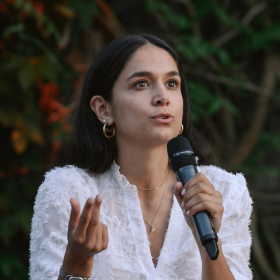
Sevim A. (European Commission, Directorate-General for Climate)
"Yes! I am an energy engineer and I work in the Department of Climate Action. The beauty of working on climate change is that it's complex, interconnected and inevitably touches every corner of our economy & society. It is very rewarding to see the relevance of my technical expertise in EU policy-making."
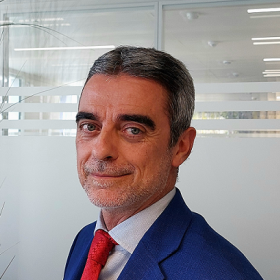
Direktorius: Olivier Salles’is
2025 m. gegužės 16 d. Olivier Salles’is tapo Europos personalo atrankos tarnybos (EPSO) naujuoju direktoriumi.
O. Salles’is, kuris yra Prancūzijos pilietis, yra įgijęs Sorbonos ir Liono II universitetų tarptautinių santykių ir politikos mokslų magistro laipsnius.
Į EPSO jis atsineša didelę patirtį politikos koordinavimo, teisės ir valdymo srityse, sukauptą per daugiau kaip 30 metų trunkančią ES tarnautojo karjerą. Jis yra ėjęs įvairias pareigas žmogiškųjų išteklių, finansų, ir teisėkūros darbo viešinimo srityse keliose Europos Komisijos tarnybose.
Anksčiau administracijos direktoriaus pareigas naujai įsteigtose ES įstaigose, pavyzdžiui, Kovos su pinigų plovimu institucijoje (AMLA) ir Europos prokuratūroje, ėjusiam O. Salles’iui yra įprasta imtis ypač daug pastangų reikalaujančių naujų projektų.
Todėl jis labiausiai tinka EPSO kylantiems iššūkiams įveikti ir užtikrinti, kad ši tarnyba sėkmingai vykdytų savo misiją būti patikima Europos Sąjungos institucijų atrankos procedūrų partnere.
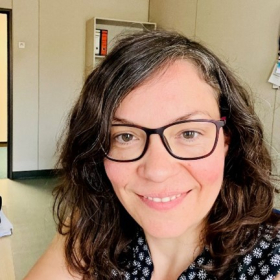
Soledad (Council of the EU)
“I joined the Council’s Directorate-General for Economic and Financial Affairs in 2016, and this is my second post here. In my first post I had the unique opportunity to be responsible for the negotiations on the Recovery and Resilience Facility, the main programme of NextGenerationEU, the post-pandemic recovery plan.
In my current post in the Budget and Cohesion Unit, I am in charge of the budget heading dealing with the Union’s external action, and as a result I was also fortunate enough to be responsible for the negotiations on the EUR 18bn macro-financial assistance package to Ukraine for 2023.
Before coming to the Council, I worked in DG FISMA at the Commission, and before that I worked at the European Parliament, where I had the chance to support the negotiations on the so-called six-pack and two-pack (the Stability and Growth Pact and the Macroeconomic Imbalances Procedure).
In sum, while I don’t work as a hardcore economist, my job does require the thinking, the knowledge and the type of analysis that an economist’s work does. Having a handle on the figures and being able to interpret them is always a valuable skill to bring to your work. And as you can see, you can switch institutions as and when it suits you, which also enriches your growth and your work – particularly, for example, during negotiations. I’m never bored!”
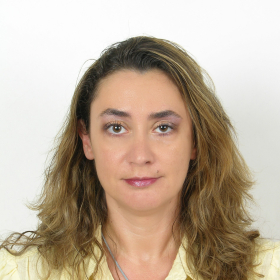
Yolanda (DG ECHO)
"Crisis management encompasses the response to emergencies, in Europe and around the world. Organised along the pillars of civil protection and humanitarian aid, crisis management, for DG ECHO, means tight deadlines, coordination with the other EU institutions and the Member States and with international organisations, travel, and, most of all, the sense that you are doing something that brings tangible benefits to millions. I work in communication – keeping the public informed on what the Union is doing in response to crises from the COVID-19 pandemic to the activation of the civil protection mechanism for Ukraine, to the organization of humanitarian air bridges to the strengthening of the EU’s firefighting fleet. Every day brings something different."
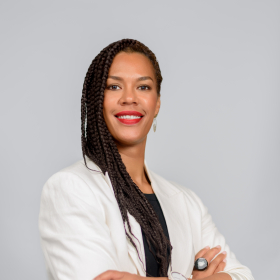
Michaela, European Commission Anti-racism Coordinator
"My name is Michaela and I am the European Commission Anti-racism Coordinator. Working for the European Commission has deepened my commitment to public service. Every day, I have the opportunity to contribute to policies that strive to reflect European values of human rights, equality and freedom with the aim of uplifting all Europeans, whether addressing inequalities in education, advocating for inclusive digital transformation, or amplifying marginalised voices in policymaking. True public service demands more than good intentions, it requires confronting systemic gaps. As a Black European woman, I’ve felt both the honour and the weight of representing communities often underrepresented in EU spaces. I’ve found strength in turning these gaps into opportunities for change. Initiatives like the EU Anti-Racism Action Plan remind me that progress is possible when institutions prioritise equity as fiercely as they preach it.
Europe’s strength lies in its diversity, and diverse voices are vital to shaping a Union where everyone belongs."
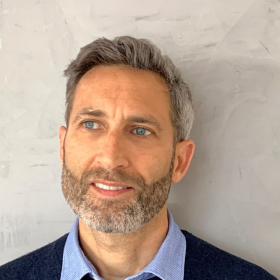
Emmanuel (Operations Department – EUIPO)
" My name is Emmanuel, I am from France, and I speak English, French, Spanish, Italian, and German – the five languages of the Office. The EUIPO, where I started working back in 2008 as an external Project Manager, was my first European institution. A couple of years later I started working in International Cooperation, which brought me closer to IP - and I loved it. A few years later, after a period working for the European Parliament, I passed a competition for IP professionals and went onto work in Design examinations in the Operations Department of the EUIPO.
I deeply enjoy my work within the Operations department, especially the balance between examining designs (core business) and being part of more horizontal projects such as Artificial Intelligence applied to trade marks and designs (mostly for image recognition and automatic classification). One of the activities that I love getting involved in is delivering presentations and conferences to international stakeholders. For instance, next October I'll be going to Cameroon to train African examiners on designs. In the past, I also had the chance to visit Latin American countries such as Costa Rica, Peru, or Ecuador in the context of International Cooperation.
Alicante is a great place to live if you are an outdoor enthusiast. I enjoy activities such as sailing and hiking. Alicante has a manageable size, and it was not difficult at all to adapt when I first arrived."
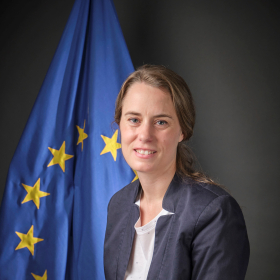
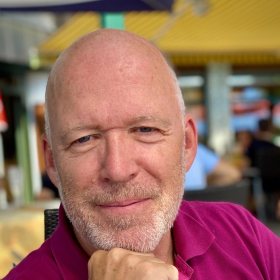
Sophie, European Commission
In this coordination unit, you have a very good overview of the DG and the pending ad upcoming MOVE proposals. It’s a perfect position to understand the working methods and dynamics of other institutions as well. It is extremely interesting to closely follow the proposals though the different stages of the co-legislation process and to see how the text evolves in the Council working parties/Coreper meetings and parliamentary Committees/plenaries, and later during the trilogue negotiations”.
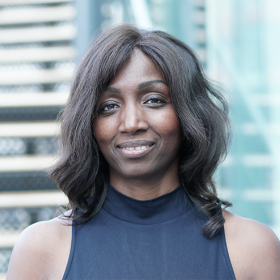
Adja (European Commission - Directorate General for Economic and Financial Affairs)
“Applying for EPSO’s competition for economists can be a great opportunity from many respects!
Hi, my name is Adja and I am a macroeconomist at the European Commission, DG ECFIN. I have a Ph.D. in applied international economics (major econometrics) from the University of Namur. Before joining the European Commission, I worked in the Federal Planning Bureau in Brussels.
Since 2019, I am working in the field of EU fiscal policy. I first spent some years in the unit in charge of the coordination of Member States’ surveillance in the context of the Stability and Growth Pact. Being in constant interaction with many units and colleagues across the DG, was a great experience, which definitely has developed both my practical knowledge on the application of the Pact, a cornerstone of the EU policy, and my leadership skills. It also widened my horizon as regards the different factors driving the EU fiscal policy and public debt developments.
As a result, I recently joined the unit responsible for monitoring and assessing the sustainability of EU public finances in relation to fiscal risks stemming, for instance, from ageing population and related issues (like pensions, health care and long-term care spending), green transition or banking sector. This is a very exciting job, involving a holistic approach to consider fiscal risks arising outside the realm of public finances stricto sensu, some of these risks being also part of the EU major challenges ahead.
So, what can you expect if you work for the European Commission?
- First, you will have the opportunities to deal with many challenges and responsibilities, that are linked to EU policies with a direct impact on Member States,
- Second, you will work with various talented and inspiring colleagues from different backgrounds, both cultural and professional ones.
- Finally, you will also have many occasions to be involved in a broad variety of topics ranging, for instance, from macroeconomic forecasts to the implementation of EU fiscal rules.
So just give it a try, have a look at the Notice of Competition and apply!”
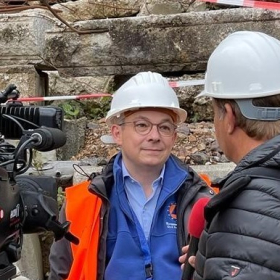
Felix (DG ECHO)
"I am a lawyer by training and have been working for the European Commission since 2005. I started my career in the legal team of DG Agriculture, then moved around inside the same DG, dealing with topics as diverse as international trade negotiations and organic farming. But after 10 very intense and interesting years, I moved to DG ECHO. I worked as an Assistant to the Director-General and later joined the Cabinet of the European Commissioner for Crisis Management. Especially these two assignments gave me a good overview of the diversity of work carried out by DG ECHO: From coordinating international emergency response in case of natural disasters in the EU to supporting humanitarian funding across the globe.
More recently, I became the Manager of a Unit of 27 colleagues that deal with the development of the Union Civil Protection Knowledge Network, a structure that will help civil protection and disaster management stakeholders to connect better and share knowledge. It also entails assisting in civil protection field exercises, organising expert trainings and many more things.
Working in DG ECHO is very special. Because it is essentially about helping people in need and preparing better for disaster. Ultimately, to save lives. I consider this a great privilege: to be part of what is probably one of the most noble policy areas of the Union. It is not about pushing paper, but delivering concrete help when it is most needed. And the COVID-19 pandemic as well as Russia’s aggression against Ukraine have shown how important it is to stand together in solidarity.
In fact, I would probably not have thought during my studies of international law at Tübingen and Bonn, London and Berne Universities that I would end up here. But I have not regretted that choice ever since.
And by the way, Brussels is also a very nice place to live and to raise a family. I cannot think of a more international and inspiring workplace. For the three children, growing up in an international environment is a huge opportunity. They grew up bilingual from the beginning and the European Schools make sure that they become enthusiastic young Europeans.
The only thing I should also point out: The weather in Belgium is not always what you would like it to be … but Belgian food and drink compensate."