
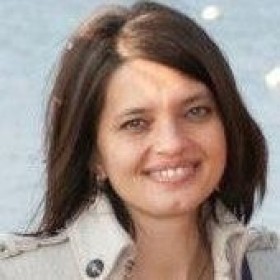
Carmen, European Commission
“Hi, I am Carmen, and I am Romanian. I joined Euratom Safeguards in 2021 as a nuclear inspector being responsible for planning and coordination of short notice inspections.
My position has a crosscutting function throughout the directorate, requiring continuous coordination and cooperation with all units and IAEA. Every day there are new challenges: use of innovative technologies, travelling to various locations etc. I am performing different tasks: from inspections on the field to meetings with specialists from all over Europe and beyond, while exchanging experiences and ideas.
We are working together to keep the world safer for us and future generations and this is very challenging and stimulating.
If you would like to do such amazing job, please join us.”
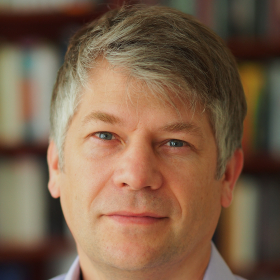
Gabor (Economist - European Commission)
“I started my Commission career in DG ECFIN and have been working for DG Competition in the last ten years as a member of the Chief Economist Team. This group of roughly 30 economists is involved in those competition investigations that require in-depth knowledge of economic theory or complex empirical contributions. Working at the Chief Economist Team gave me the opportunity to work on mergers and acquisitions in several industries, from petrochemicals to stock exchanges, and to contribute to some of the most interesting antitrust investigations concerning Google’s and Amazon’s digital services. Besides the case-specific work we are also involved in policy projects, for example I co-authored a study on how industrial concentration changed in Europe in the last 20 years. As an economist trained in empirical industrial organisation and interested in competition policy, this is indeed a great place to work.”
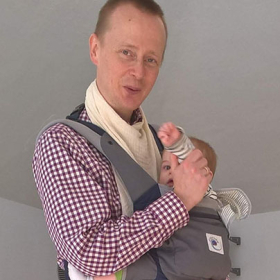
Kurt S. (European Research Executive Agency)
“The first glimpse of Brussels my family and me got took place by the Halle Gate, a fairy-tale monument which is more than 600 years old and, in fact, is the most remarkable witness of the City's medieval past. When being sportive you may decide to climb its 169 steps to enjoy Brussels’ most stunning panoramic view. Another venue we adore spending time in, is the Henry Le Bœuf Hall which offers visual harmony and acoustic quality. Did you know that it was entirely designed by Victor Horta and that its inauguration took place in October 1929? Since then it offers through its charming harmony of the scarlet velvet seats, the parquet floor, the white of the bare colonnades, a unique experience and acoustic quality recognised by music legends worldwide.”
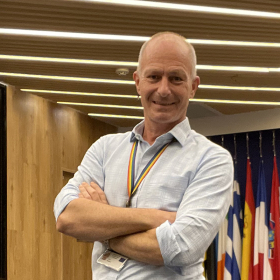
Johan S. - Head of Administration at the EU Delegation to Myanmar
What is your background and what did you do before becoming a Head of Administration?
I worked at DG INTPA in Finance & Contracts at Headquarters and in the Delegation to the Philippines. My first posting as Head of Administration was at the Delegation to Indonesia and Brunei and ASEAN and now I have been Head of Administration to Myanmar since 2016. In between I worked 2 years at the Inspection and ex-post Division in Headquarters.
In a nutshell, how would you describe the role of Head of Administration in an EU Delegation?
In a nutshell, the Head of Administration has to make sure that everything is in place so that the other colleagues can do their job.
That includes infrastructure (accommodation for expat staff, offices), security, office cars, accounting (payments of all administrative costs of the Delegation and work related expenses of the staff, management of the Delegation’s local bank accounts), tendering of contracts for the above mentioned activities and management of the contracts, human resources of the local agents (recruitment, evaluation, promotion, medical reimbursements), training coordinator, protocol (obtaining visas, diplomatic ID, driver’s licences for all expatriate staff and their family members, import/export authorisations, tax exemptions, consular correspondent, etc) and IT. And when things go wrong in the country, you have to be efficient in crisis management.
What is the most satisfying part of your job?
The job is so diverse, you never get bored one single moment. And it is very satisfactory to see concrete results of your work.
Why should people apply to work for the EU and in particular for the job of Head of Administration in an EU Delegation?
If you are a person who likes diversity, who believes in the European project and who wants to make a difference, working for the EU is for you!
The job of Head of Administration is without any doubt the most interesting (and challenging) job available for AST officials or Contract Agents. Apart from the Head of Delegation, the Head of Administration has the most responsibilities in a Delegation and you really make a difference in the daily life of your colleagues. The diversity of tasks you are responsible for keep you alert and you learn every day – not only procedures and technical knowledge but also in social skills and about the culture of the country you are posted in.
To feel good as Head of Administration, you must be willing to work a lot and take on responsibilities, have excellent people skills, be a problem solver, be stress resistant and be a positive person.
How do you handle /how do you see the frequent rotation and opportunities for professional growth in EU Delegations / in the EEAS?
Even if you apply for the same job, every country you are posted in brings its own specificities and uniqueness into your daily work. You adapt, learn and grow as a professional and as a person. The EEAS allows you to shorten your posting if the country is not your cup of tea, or extend if you really like it. Through your daily interaction with your colleagues of other sections, you also learn about their job and the EEAS allows you to apply for other types of posts if that is what you want.
What are the advantages of working in a diverse environment like the one of EU Delegations?
We were all raised within our own community with its culture, values and habits. Working in an EU Delegation exposes you to a multitude of cultures, habits and values. Not only from the country you are posted in, but also from your other expatriate colleagues (and friends) who come from all over Europe (the world). These exposures enrich your life, broaden your mind and make you a better person.
What do you find difficult in turn?
Living far away from friends and family is sometime difficult, but the EEAS foresees in annual home leave and rest leaves (in hardship countries) so that you can go back regularly to Europe.
What is it like to work and live in EU Delegations?
First of all, it is important to prepare yourself before you apply for a certain country. Doing a bit of research on life in a country can save you from bad surprises or disappointments. And still then, you will be in for plenty of surprises, which makes it so interesting to work and live in a different country. And while you immerse yourself as much as you want in your new country, inside the Delegation, you will be in an environment that is familiar, a little piece of Europe.
In a Delegation you will be part of a small community with its advantages and disadvantages. It is therefore important to have a positive mindset and maintain good relationships with your colleagues. Overall, I’ve only had good experiences, learned so much, did things I never thought I would be able to do and made friends for life. Of course there are difficult moments, situations or colleagues but that you have everywhere and the advantages of being able to live and work abroad largely compensate for the less pleasant instances you may experience.
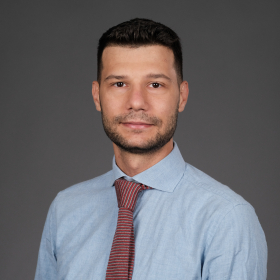
Preslav M, European Parliament
I have been working in the European Parliament for five years. In my Unit, we advise and support the Members of the European Parliament (MEPs) in the management of their local assistants’ and local service providers’ contracts. ‘Local’ in this context means that the operations are occurring in the countries in which the MEPs were elected.
My role is to make sure that MEP’s requests are handled professionally and payments to their staff and service providers are made on time. An important part of my job is to verify and guarantee the legality and regularity of these transactions by ensuring that the appropriate rules are observed.
The variety of situations and questions that I face daily, while having direct contact with MEPs and their assistants, is what I consider the most challenging but also interesting aspect of my job. Furthermore, it is rewarding to know that my work contributes to the sound and transparent management of the Parliament's finance and budget.
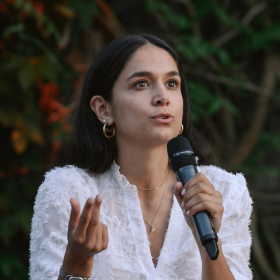
Sevim A. (European Commission, Directorate-General for Climate)
"Yes! I am an energy engineer and I work in the Department of Climate Action. The beauty of working on climate change is that it's complex, interconnected and inevitably touches every corner of our economy & society. It is very rewarding to see the relevance of my technical expertise in EU policy-making."
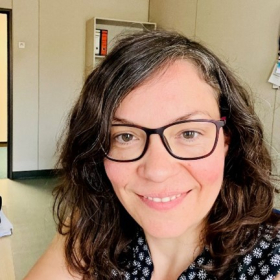
Soledad (Economist - Council of the EU)
“I joined the Council’s Directorate-General for Economic and Financial Affairs in 2016, and this is my second post here. In my first post I had the unique opportunity to be responsible for the negotiations on the Recovery and Resilience Facility, the main programme of NextGenerationEU, the post-pandemic recovery plan.
In my current post in the Budget and Cohesion Unit, I am in charge of the budget heading dealing with the Union’s external action, and as a result I was also fortunate enough to be responsible for the negotiations on the EUR 18bn macro-financial assistance package to Ukraine for 2023.
Before coming to the Council, I worked in DG FISMA at the Commission, and before that I worked at the European Parliament, where I had the chance to support the negotiations on the so-called six-pack and two-pack (the Stability and Growth Pact and the Macroeconomic Imbalances Procedure).
In sum, while I don’t work as a hardcore economist, my job does require the thinking, the knowledge and the type of analysis that an economist’s work does. Having a handle on the figures and being able to interpret them is always a valuable skill to bring to your work. And as you can see, you can switch institutions as and when it suits you, which also enriches your growth and your work – particularly, for example, during negotiations. I’m never bored!”
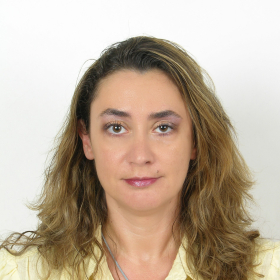
Yolanda (European Commission)
"Crisis management encompasses the response to emergencies, in Europe and around the world. Organised along the pillars of civil protection and humanitarian aid, crisis management, for DG ECHO, means tight deadlines, coordination with the other EU institutions and the Member States and with international organisations, travel, and, most of all, the sense that you are doing something that brings tangible benefits to millions. I work in communication – keeping the public informed on what the Union is doing in response to crises from the COVID-19 pandemic to the activation of the civil protection mechanism for Ukraine, to the organization of humanitarian air bridges to the strengthening of the EU’s firefighting fleet. Every day brings something different."
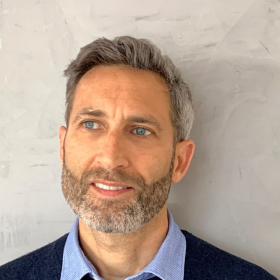
Emmanuel (Operations Department – EUIPO)
"My name is Emmanuel, I am from France, and I speak English, French, Spanish, Italian, and German – the five languages of the Office. The EUIPO, where I started working back in 2008 as an external Project Manager, was my first European institution. A couple of years later I started working in International Cooperation, which brought me closer to IP - and I loved it. A few years later, after a period working for the European Parliament, I passed a competition for IP professionals and went onto work in Design examinations in the Operations Department of the EUIPO.
I deeply enjoy my work within the Operations department, especially the balance between examining designs (core business) and being part of more horizontal projects such as Artificial Intelligence applied to trade marks and designs (mostly for image recognition and automatic classification). One of the activities that I love getting involved in is delivering presentations and conferences to international stakeholders. For instance, next October I'll be going to Cameroon to train African examiners on designs. In the past, I also had the chance to visit Latin American countries such as Costa Rica, Peru, or Ecuador in the context of International Cooperation.
Alicante is a great place to live if you are an outdoor enthusiast. I enjoy activities such as sailing and hiking. Alicante has a manageable size, and it was not difficult at all to adapt when I first arrived."
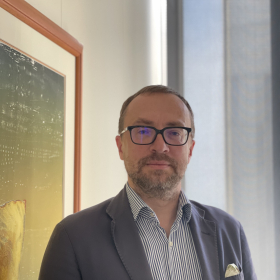
Marko (Lawyer linguist – Court of Justice of the EU)
My name is Marko, and as a lawyer-linguist at the Court of Justice of the European Union, my task is to ensure that court documents in foreign languages are translated into Estonian in such a way that the reader believes they were originally drafted in Estonian.
In my daily work, I not only need to be proficient in foreign languages, but, in addition to a solid knowledge of EU law, I must also be familiar with the legal systems of other EU Member States, sometimes creating new legal concepts in Estonian when necessary. As a quality advisor at the Estonian Translation Department, I believe that, alongside ensuring access to the widest possible body of case law in Estonian, it is crucial that our translations are as accurate as possible. This allows us to convey the true meaning of legal texts to Estonian readers.
Having worked at the Court of Justice of the European Union for over 20 years, I can confirm that the legal issues I translate are both highly engaging and topical, offering an opportunity to contribute personally to the development of the Estonian legal language. The rapid development of technology and artificial intelligence also presents daily challenges in my work – I have the extraordinary privilege of being at the heart of it all in Europe.
*****
Euroopa Liidu Kohtu jurist-lingvistina on minu ülesanne tagada, et võõrkeelsed kohtudokumendid oleksid tõlgitud eesti keelde nii, et lugejale jääks mulje, et need ongi algselt koostatud eesti keeles.
Minu igapäevane töö eeldab laialdast võõrkeelte oskust, liidu õiguse tundmist ning võrdleva õiguse analüüsi, mis hõlmab kõikide liikmesriikide õigussüsteemide mõistmist, selleks et kasutada tõlkimisel võimalikult täpset eesti õigusterminit või vajaduse korral luua uus termin. Eesti tõlkeosakonna kvaliteedinõunikuna seisan hea selle eest, et eesti keeles kättesaadava kohtupraktika tõlked oleksid võimalikult kvaliteetsed ja usaldusväärsed. Nii saab Eesti lugejale eesti keeles edasi anda õigustekstide tegeliku mõtte.
Olles Euroopa Liidu Kohtus töötanud üle 20 aasta, kinnitan, et tõlgitavad õigusprobleemid on äärmiselt põnevad ja aktuaalsed ning pakuvad võimaluse isiklikult panustada eesti õiguskeele arengusse. Tehnoloogia ja tehisintellekti kiire areng seab iga päev väljakutseid ka minu töös – mul on erakordne privileeg olla otse Euroopa südames.