
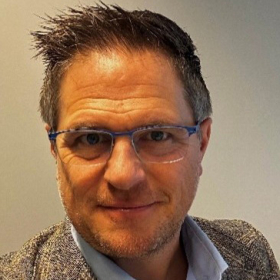
Rainer, European Commission
“As a policy officer in the European Commission's Directorate-General for Taxation and Customs Union (DG TAXUD), I manage CESOP, an IT system designed to combat e-commerce tax fraud. I contribute to improving business compliance when trading with EU citizens and companies. I am proud to be able to influence the creation of legal and technical tools enhancing tax fraud detection, together with Member States and international organisations, such as the OECD and Europol. After over nine years in DG TAXUD, I appreciate the unique, inspiring, joyful and challenging opportunities to work in a multicultural community, where colleagues and managers show respect for individual work and personality.”
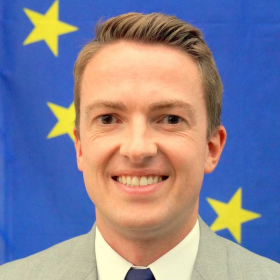
Michiel H., Case handler
Since 2017, I have been working as a case handler at the European Commission’s competition department, in the team enforcing EU State aid rules for banks in difficulty. I write State aid decisions, conduct complex economic and legal assessments, and coordinate closely with Member State authorities and other EU stakeholders. It is exciting work, involving a delicate balance between protecting financial stability and preventing unfair competition.
Having joined the Commission in 2012, I first worked for five years on the EU’s macroeconomic and budgetary surveillance of one of the largest euro-area countries. Given the public debt crisis then, it was a challenging but also interesting period.
I am trained as an economist and hold a Master’s Degree in Commercial Engineering from the University of Leuven and a postgraduate degree in European Economic Studies from the College of Europe. Before joining the European Commission as an EU official, I worked for two years in strategy consulting, did a blue-book traineeship at the Cabinet of the European Commissioner for Trade, and participated in the Graduate Programme of the European Central Bank.
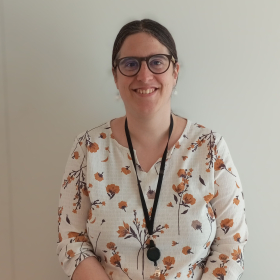
Aude, European Parliament
"Multilingualism - the possibility to express and inform oneself in any official language - plays a key role in Europe. This makes my work at the European Parliament’s Directorate-General for Translation useful. As the leader of the team responsible for TRAD’s statistics, I can analyse and make available information about the use of languages, as well as show the work of our translators. I like the fact that my work includes different skills. I am working with the technical part of data processing as well as the design of metrics to monitor the situation. Therefore, collecting, cleaning and organizing data is my daily job, in addition to creating new metrics fitting our management needs and issuing/reworking our indicators set."
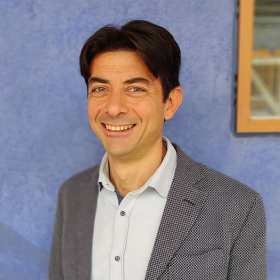
Nicola, European Commission (Eurostat)
"Official statistics are not just dry numbers: they are the lifeblood of democracy. They are essential for policy makers to make informed decisions, as well as to inform citizens on how economies and societies evolve, so that they can form their own opinion.
I am proud to work in Eurostat’s Directorate on Macroeconomic statistics, as the figures we produce – for instance on Gross Domestic Product or Household Price Index (i.e. inflation), just to mention two very well-known macroeconomic indicators –, crucially support the economic policy of the EU."
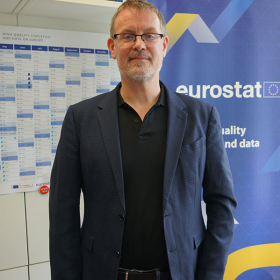
Martin, European Commission (Eurostat)
"At Eurostat we’re developing the European statistics of tomorrow.
As a statistician, I could not have been part of such a variety of challenging and meaningful projects anywhere else.
At the heart of the European Statistical System, this is the place to do exciting stuff while making a difference!"
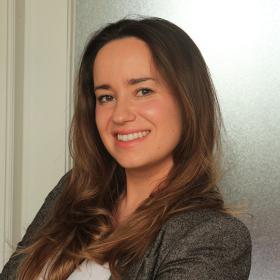
Andrea, European Commission (Eurostat)
"I have always wanted a job with a purpose – to make society a little bit better. And a healthy society starts with information you can trust.
Working at Eurostat allows me to contribute to the public interest and provide the reliable data that our policymakers – and all of us – depend on. Even before I worked here, my friends and I used to send each other Eurostat infographics if we wanted to prove a point, so it’s great to be at the source now.
Plus, it’s an interesting, appreciative, and multicultural workplace!
I came to Eurostat through the Generalist/Graduate competition, after first working as a trainee for the EU agency for energy regulation in Ljubljana. Work at Eurostat is very varied: we have a lot of contact with other Directorates-General (DGs)of the Commission, but we also work closely with Member States. I personally work with data on digitalisation and internet use, which is such a fast-changing topic that it always keeps me on my toes.
As Eurostat’s Youth Correspondent, I also have a special interest in ensuring that our work reflects the needs and perspectives of the younger generation. We are all working together to shape the EU of tomorrow – if you want to be a part of it, check out the EPSO website and apply!"
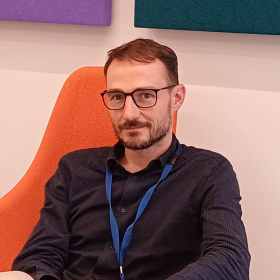
Jean-Sébastien, Council of the European Union
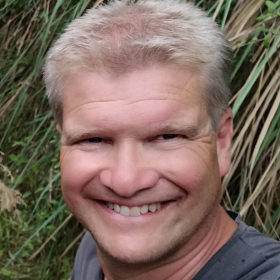
I joined the Council of the European Union in 2015 after passing an AST competition in finance. The funny part is that I graduated as a translator, but my professional career led me through a completely unexpected path! And this is what I love about my job: I got here because of my skills and competencies, just like my colleagues from all Europe that come from different backgrounds but who share the same professionalism and dedication. My tasks here at the Council allow me to play an active role in the organisation of meetings and summits that shape the future of the European Union, and I strongly encourage anyone to apply for a job in the institutions!
Johan, Council of the European Union
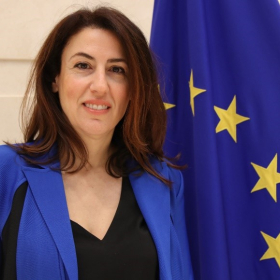
I started my career as an assistant in the accounting unit of the General Secretariat of the Council (GSC). After a few years, I moved to the internal audit service where I analysed all the financial circuits in the house and issued recommendations to promote efficiency gains. In the meantime, being certified, I joined the Buildings and Logistics Directorate as an administrator and picked up the role of Head of Sector leading the budget execution sector. A few years ago, I moved to the IT department, where I now manage a finance team and coordinating all the financial obligations related to the budgetary cycle. Do you still think that Finance is boring?
Evgenia, European Commission
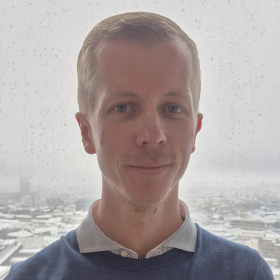
“I have been working in taxation files in both indirect and direct taxation for 21 years, first in the public sector in Greece, then in the Economic and Financial Affairs (ECOFIN) Council and for the last 4 years in the European Commission after succeeding in the EPSO AD taxation competition. For me, working in the Commission means that ‘every day counts’. It counts because I am contributing, with my own policy reflections, analytical work and experience, collectively with other colleagues, to shaping EU taxation policy. Every contribution is a little step further in making the Single Market work in practice for citizens and business.”
Bob, European Commission
“Since 2017, I have been working in the Directorate General for Competition, with the last 2,5 years focused on State aid and taxation. I particularly enjoy the wide variety of topics that my current job covers. In the end, there are many forms of taxation and tax is not limited to specific sectors or companies. From energy to retail and from VAT to corporate taxation, it is all part of my job. What I enjoy most in my current role is offering a helping hand on tax-related questions to other parts of the Commission.
The Directorate General for Competition is a dynamic, well organised service and a great place to work for both new and established colleagues. I really feel that my work/private life balance is respected here.”